Centre Overview
The Neurovascular Services program at Fortis Hospital, Mulund, Mumbai, is one of Western India’s leading centres for advanced neurovascular and endovascular interventions. Based within Fortis Hospital Mulund, a seven-time JCI-accredited quaternary care institution, the program is recognized for delivering comprehensive, evidence-based care for complex cerebrovascular and spinal vascular disorders. The hospital’s repeated Joint Commission International accreditation reflects its commitment to the highest standards of patient safety, clinical excellence, and quality of care.
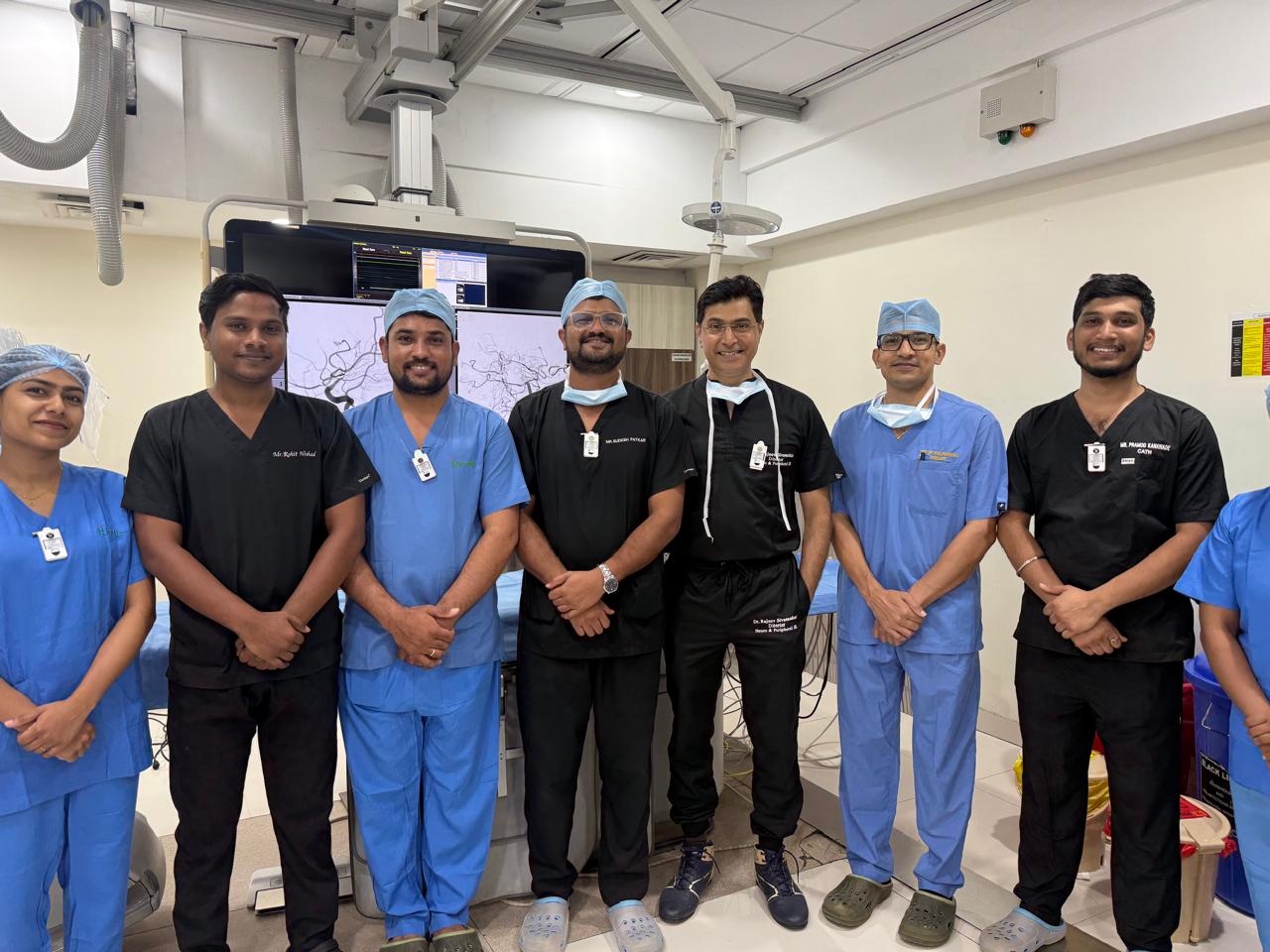
The department is supported by state-of-the-art infrastructure, including advanced biplane Digital Subtraction Angiography (DSA) suites, 3.0T MRI, high-definition CT imaging, and dedicated neurocritical care facilities. As a high-volume tertiary referral centre, it provides round-the-clock management of acute stroke and undertakes a broad spectrum of complex neurovascular procedures for patients referred from across India and neighbouring regions.
Areas of expertise include acute ischemic stroke intervention, intracranial aneurysm treatment, arteriovenous malformations (AVMs), dural arteriovenous fistulas (DAVFs), intracranial atherosclerotic disease (ICAD), spinal vascular malformations, and complex head and neck vascular interventions.

Leadership & Team
Dr. Rajeev Sivasankar, MD, DNB, FINR, PDCC
Director, Neurovascular Services
Dr. Rajeev Sivasankar is a highly experienced neurointerventionist and Director of Neurovascular Services at Fortis Hospital, Mulund, Mumbai. He has extensive expertise in the endovascular management of acute ischemic stroke, intracranial atherosclerotic disease (ICAD), cerebral aneurysms, arteriovenous malformations (AVMs), dural arteriovenous fistulas (DAVFs), spinal vascular malformations, and other complex cerebrovascular disorders.
Dr. Sivasankar is actively involved in clinical research, innovation, and physician training. The Neurovascular Services program at Fortis Hospital, Mulund has established itself as an active contributor to innovation and research in neurointervention. The centre participates in the evaluation and clinical validation of emerging neurovascular technologies and has served as a Principal Investigator site for the assessment of indigenous Indian neurointerventional devices, including next-generation stent retriever platforms. The team is actively involved in multicentre national and international research collaborations and has contributed to peer-reviewed publications addressing complex cerebrovascular disease, novel endovascular techniques, and evolving treatment paradigms.
Dr. Sivasankar serves as the Course Director of the TINMAN (Techniques in Neurointervention and Management Strategies) program, a dedicated educational initiative focused on advancing neurointerventional practice and training. He also hosts the educational podcast Getting Wired: Decoding Neurointervention, featuring renowned international experts discussing contemporary challenges and innovations in neurovascular care.
Widely recognized for his commitment to clinical excellence, education, and innovation, Dr. Sivasankar has contributed extensively to the development of neurointerventional services and physician training programs in India.
The department functions within a highly collaborative multidisciplinary framework comprising neurointerventionists, neurologists, neurosurgeons, neuro-anesthesiologists, critical care specialists, dedicated cath-lab nursing teams, imaging technologists, fellows, and clinical associates. This integrated approach ensures seamless patient care from diagnosis through intervention and rehabilitation.